
This page highlights press and internet reviews of the Mont Alto Motion Picture Orchestra's live performances and recordings. Some reviews of our recorded work are found on the Recordings page.
New York City, Films at Lincoln Center program
"...it’s a particular pleasure to hear silent-film music as it was actually performed in most of the first-run theaters of that era — which is to say, by an orchestra.... Mr. Sauer specializes in compiling scores from the authentic photoplay music of the period, drawing on the work of neglected composers like Gaston Borch and J. S. Zamecnik; the results are often breathtakingly beautiful and always in the strict service of the film on the screen." -- Dave Kehr, the New York Times
Reviews of our score for The Enchanted Cottage, from various sources
Reviews of our score for The Johnstown Flood, from various sources
""...impressive in its scope and undertaking: accompanying this silent film is a robust DTS-HD 2.0 Master Audio (stereo) track featuring a newly-commissioned musical performance by Colorado's acclaimed Mont Alto Motion Picture Orchestra. It's entirely based on The Johnstown Flood's original 1926 score which even replicates a few stray simulated "sound effects" (knocking on a door, etc.) and fits the overall tone perfectly. Not surprisingly given its young age, there's no damage to report; from start to finish, it's a crisp and full-bodied presentation with excellent channel separation that bolsters the film's impact at key moments."" Blu-Ray.com. A wonderful score by the Mont Alto Orchestra supports and enhances the film very well. James Bazen, on Facebook. "...the Blu-ray release is an exquisite restoration boasting a robust score."" Films in Review.
Steamboat Bill Jr, at the San Francisco Silent Film Festival, May 2022
To watch a silent comedy with a large and receptive audience is always a particular privilege, and this was no exception. The Mont Alto Motion Picture Orchestra provided a hugely enjoyable accompaniment. This is silent film as it was meant to be seen. --Brooksie at the Movies
7th Heaven, at the Turner Classic Movies Festival, April 2022
For the screening, the Colorado-based Mont Alto Orchestra performed its own original score (complete with a musician supplying Foley sounds) for “7th Heaven.” “It’s such an incredible experience to watch a silent film with live accompaniment,” Muller said. “Silent films are pure cinema. They’re one of the greatest experiences you can have as a cinephile. And this has been magic. I’m so happy that this is how we’re lowering the curtain on the TCM Classic Film Festival 2022.” -- rogerebert.com
Steamboat Bill Jr, at the Apollo Theater in Oberlin Ohio
"Throughout the 71 minutes of continuous playing, Sauer and his ensemble — violinist Britt Swenson, cellist David Short, clarinetist Brian Collins, and trumpeter Dawn Kramer — were at the top of their game, making easy work of the hyper-complex virtuosic passages and quick transitions of mood and tempo. The performance did what it was supposed to do — underpin the film’s narrative but not get in its way.
"The near-capacity audience, enthralled with Keaton’s comedic facial expressions and acrobatic ability as well with the ensemble’s adroit musicianship, responded with a standing ovation. On a personal note, I have never enjoyed going to a movie this much."
-- Mike Telin, Cleveland Classical, February 18 2022.
The General, at the Prescott Film Festival
"Speaking for myself, I was walking on air. My family and I stayed up late talking about the event.
"And I wasn’t alone: we have our audience rate each of our events. The Silent Symphony event scored a 99%-- the highest in our 10 year history. Congratulations!" -- Clint Ewell, Prescott Film Festival
The Wedding March, at the 2019 San Francisco Silent Film Festival
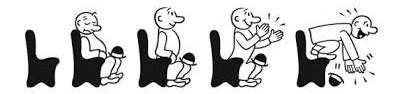
"The star of the show, to me, was the Mont Alto Motion Picture Orchestra. The accompaniment was so packed with inside musical references and allusions to composers, and at the same time so appropriate to the action, that I had to keep reminding myself that the characters in the story weren’t hearing the same soundtrack. The music was intricate, sophisticated, tuneful and extravagant, and the little man was jumping out of his chair, both in appreciation and because he wanted to dance." -- Leah Garchik, San Francisco Chronicle
Note: "the little man jumping out of his chair" is a reference to the Chronicle's long-time movie and theater rating graphic series:
Cohen Collection release of Go West and College
"The image quality is crisp and clean, as we would expect. The biggest draw for this collection is the new music. Go West is scored by the Mont Alto Motion Picture Orchestra and College is scored by Rodney Sauer and performed by a small ensemble. I particularly enjoyed the Go West music, which is suitably playful and humorous and includes some musical puns. (Musical puns are always a plus in my book.)" -- moviessilently.com
Kino-Lorber release of The Birth of a Nation
"Being a silent film, there’s no sound element to preserve, but the Mont Alto Motion Picture Orchestra’s score is spectacular, bravely rising to meet the film on its level, and not sheepishly side-stepping when it comes time to blare the triumphant music for those characters we now see as villains, but which the film posits as heroes." --Scott Nye, CriterionCast.com
2018 San Francisco Silent Film Festival
"I admitted that Battling Butler was not one of my favorite Keaton features, nor was it high on anyone else’s list, although it was a great success in its time—much more so than his next film, The General. Go figure. But something magical occurred Sunday night. There in the intoxicating atmosphere of the Castro Theatre, with a simpatico audience, a stunning new print from the Cohen Collection, and an ideal score played by the Mont Alto Motion Picture Orchestra, the movie sprang to vivid life and played like gangbusters. Afterwards, all my film buff friends were saying the same thing: “I never enjoyed it so much” and “What a great comedy. Why haven’t I realized it before?”
"This comes as a timely reminder that the audience plays a crucial role in the unspooling of any movie, new or old…but it’s especially important where silents are concerned. As much as I enjoy the convenience of DVDs and Blu-rays, they are no substitute for a screening in a darkened theater, on a giant screen, with the right music and an enthusiastic audience." -- Leonard Maltin
Old Ironsides, Kino-Lorber Blu-Ray and DVD release 1918
"Best of all, however, is pianist Rodney Sauer’s interpretation of musical elements from J.S. Zamecnik’s and Hugo Riesenfeld’s original and compiled score, adapted from cue sheets also held by the Library of Congress and meticulously re-timed and re-scored to fit the film’s current length and restored frame-speed. Employing a leitmotif style for its principal characters – their individual themes woven throughout their appearances in the story – the more familiar martial tunes, patriotic marches, and sea chanties dramatically fuse the intimate with the epic and the personal with the historical. (Plus, the reviewer is always simply impressed by a musician playing a solo instrument for two solid hours and still being able to strike those trilling high note rolls with as much force as two hours before.) The best compliment one can give a silent film score is it will have one humming its images for days: Rodney Sauer plays Old Ironsides as if he were film-length ship-aboard." -- Zekefilm.org
KDFC FM, San Francisco's classical music station, chooses "Entreaty" as the "Album of the Week."
Week of June 11th, 2018 • The Mont Alto Motion Picture Orchestra • Entreaty
Listening to the new album from The Mont Alto Motion Picture Orchestra is like stepping into a time machine; taking us back the Music of the Silent Cinema. The five-piece ensemble from Boulder, Colorado revives music composed and arranged for silent movie orchestras. They recently performed at the SF Silent Film Festival, prompting a rave from the Chronicle’s Leah Garchik, “The music was terrific, like hot fudge on a sundae!”
2017 Telluride Film Festival: Kean, or Disorder and Genius (1924), from Albatros films
"I always love seeing the The Mont Alto Motion Picture Orchestra, led by Rodney Sauer, but they outdid themselves in their accompaniment to this challenging movie, which concludes with the longest, slowest death scene ever committed to celluloid." -- Leonard Maltin, at leonardmaltin.com.
The Blot on DVD/BluRay (as part of Flicker Alley's "Early Women Film-Makers" anthology)
"Director Lois Weber’s most-famous film, The Blot (1921), is a drama of small-town poverty in an academic family, and a star-crossed love triangle.... The film is accompanied by an excellent music score compiled by Rodney Sauer and performed with the Mont Alto Motion Picture Orchestra — always appropriate to the film’s action and always entertaining.
The Phantom of the Opera at the 2018 Turner Classic Movies Festival
"Later that evening I attended the other silent film screening at the Festival, the Lon Chaney horror classic, The Phantom of the Opera. Historian Leonard Maltin once again introduced proceedings before interviewing Rodney Sauer, leader of the Mont Alto Motion Picture Orchestra. Sauer described the various ways different size houses accompanied silents, from a simple piano at small town theatres to pipe organs at large neighborhood houses to full orchestras at movie palaces like Hollywood’s Egyptian or Chinese Theatres. Mont Alto itself employs vintage score cues sold to theatres to compile orchestrations just as they were in the 1920s. They provided a lush romanticism to the gothic film, adding in ominous notes of passion and foreboding. To provide a logical accompaniment to the scenes where the Phantom plays a pipe organ, Sauer created one out of an electric piano, adding a rich, dark overtone to those scenes. The music added deep emotional resonance to the film." -- Mary Mallory, at The Daily Mirror
Beggars of Life on DVD/BluRay
"Rodney Sauer’s Mont Alto Motion Picture Orchestra, a chamber ensemble of five performers, was formed in 1994 expressly to accompany silent films, playing in what Sauer calls an “authentic period style, using original photoplay music.” Since then the Orchestra has enhanced numerous home video releases, and in Beggars of Life, Sauer and company are once again authoritative and expressively pitch-perfect. But the players are not there to lead, distract or showboat, but to underscore, strictly in partnership with the film.
"On the Mont Alto internet site, Sauer has posted a fascinating essay detailing the construction of the Beggars score, which he explains is a compiled score adapted from the film’s original surviving cue sheet. The site provides a scan of that vintage sheet, which offers over 40 musical “suggestions,” notated briefly on single staffs, of mostly light classical and pop tunes that floated about in the musical zeitgeist of the early 20th century. Sauer explains that he used the sheet as in its stated intention – an aid for the compiler to select appropriate music – and replaced many of the cues when the published music either could not be located, it was considered ill-suited, or in one case deemed offensive. -- Bright Lights Film Journal.
"The 2.0 DTS-HD MA sound mix features a score by The Mont Alto Motion Picture Orchestra, "employing selections from the original 1928 Paramount cue-sheet." Instrumentation is clear and commanding, providing emotional movements and more pulse-pounding moods when onscreen action heats up." -- Blu-Ray.com
"The musical score is compiled and performed by The Mont Alto Motion Picture Orchestra, employing selections from the original 1928 Paramount cue-sheet. It's very string oriented with a soulful violin adding another layer of melodrama. It sounds quite strong. The Kino Lorber Blu-ray is a must-own for Silent-era, and Louise Brooks, fans and the two commentaries only add to the value. Very strongly recommended!" -- DVDBeaver.com
"The Kino Classics Blu-ray of Beggars of Life is a very good scan of elements held by the George Eastman Museum (where Ms. Louise lived for a great part of her retirement). The film is worn up front but entirely intact; I noticed no missing frames. Sharpness and stability are excellent, with the proviso that some scenes are purposely soft-focus filtered for a dreamy, hazy look. The Mont Alto Motion Picture Orchestra performs a fine score sourced partly from an original Paramount Pictures music cue sheet calling up various song selections for individual scenes. This is a great way to see this movie". -- DVD Savant.
"The recently recorded score by the Mont Alto Motion Picture Orchestra is often lovely and rarely distracting..." -- Films in Review
Children of Divorce DVD/BluRay
"The presentation uses a new score by the Mont Alto Motion Picture Orchestra and it sounds as strong as the video - beautiful depth noted in the violin strings." -- DVD Beaver
No, "Children of Divorce" may not be one of the ten best films of the silent era, but silent films fans should not cease in their praise of Flicker Alley in bringing this film to high quality Blu-Ray with a typically fabulous score by the Mont Alto Motion Picture Orchestra. Picture quality is excellent with only a few minor moments of decomposition. And with a cast of stars of this magnitude, who could resist owning a copy? -- Silents Are Golden
"The track features a fitting score by the Mont Alto Motion Picture Orchestra, which flawlessly hums along with the film’s image." -- Slant Magazine
2017 San Francisco Silent Film Festival
"Then it was time for a little early Cecil B. DeMille melodrama (he produced, director was Rupert Julian) with Silence (1926.) Jim Warren (H.B. Warner) is in jail. He's going a little mad listening to the constant hammering. That hammering is construction of a gallows. A gallows that he will hang from. And although he has been a crook for much of his life, his lawyer is sure that he's innocent and is taking the fall for someone else. So the story is told as a flashback, unraveling a tale of love, misunderstandings, blackmail, and an unorthodox family (at least, for the times.) High melodrama, well done. Plus, it was thought lost until just last year when Cinémathèque Française discovered it in their archives. So we were the first audiences in ~90 years to see it!... And as long as we had to wait 90 years to see it, we might as well see it with the best possible accompaniment, Mont Alto Motion Picture Orchestra." -- Jason Wiener
2014 San Francisco Silent Film Festival
"... A wide variety of musical accompanists made the event all the more enjoyable. I’m a longtime fan of the Mont Alto Motion Picture Orchestra, led by Rodney Sauer and now celebrating its 25th year: listening to their scores for The Four Horsemen [of the Apocalypse] and the Dolores Del Rio feature Ramona was a particular treat." -- Leonard Maltin, Leonard Maltin's Movie Crazy, June 4, 2014.
"If you get a chance to see an accompanying score performed by the Mont Alto Motion Picture Orchestra, don’t miss out. Their composition last night fit really well, with a good amount of tango music, of course. Their forte is in the music and less in sound effects, which can be gimmicky if mishandled. There wasn’t a ton of percussion, which I was thankful for (I’ve seen a number of live-music-with-silents where the drummers go a little crazy) and when it was used it was tasteful and raised the tension (like the sole rat-a-tat of a drum announcing advancing troops, or a haunting echo-y thrum of a drum conveying death)." Review of Four Horsemen of the Apocalypse, by John Angelico, SFGate.com.
"For those who have always wondered if they’d ever see it, the newly rediscovered and restored Ramona (1928) should not disappoint. It’s a slick, well-made and enjoyable slab of soap, short on psychological depth but long on pictorial beauty, with numerous shots composed as if they were paintings come to life. In the title role, Dolores del Rio is the high-spirited ward of a stern Spanish-American mother who, upon falling in love with an Indian, discovers that she herself is part-Indian. The racial angle is not covered in any great depth, although an Indian massacre is surprisingly brutal. Though Carewe's eye is firmly on the epic, there are a number of lovely minor touches that push the film above the average.
"Likewise, where Dolores Del Rio could have gotten away with sitting around looking staggeringly beautiful (which she does), she contributes a spirited performance that largely avoids straying into cutesy-poo. Warner Baxter is nearly unrecognisable as her Indian love, Alessandro. Top marks to the Mont Alto Picture Orchestra’s lush score, and also for dispensing with the famous theme song in a fun singalong prior to the actual film (though it still remained lodged in my head for days)."
"The wryly humorous Swedish film The Girl in Tails (1926) was one of the great delights of the festival. The lovely but downtrodden Katja (Magda Holm) is neglected by her father, who is happy to lavish money on expensive suits for her brother (Erik Zetterstrom) but refuses to lay out a penny on an evening dress for a swanky graduation ball. Sick of her mistreatment, Katja takes matters into her own hands in dramatic fashion, arriving in her brother’s most expensive suit. The incident creates a scandal amongst the small-minded local townspeople - the most formidable of which is played by the film’s director, Karin Swanstrom - but also leads to her emancipation.
"The witty titles, a number of quirky elements, such as the ‘horde of learned women’ who have formed a kind of rural sorority, and a sense of genuine empathy amongst the comedy ensures that a concept that might have been thin and gimmicky in other hands remains good to the last. Katja’s emergence from her shell drew genuine cheers from the audience. A really fun experience, with no little thanks to another quality Mont Alto accompaniment." -- Brooksie, review of the festival at nitrateville.com, June 3 2014
Steamboat Bill Jr., as part of the program "Lights, Camera, Music" for the Fort Collins Symphony, November 15, 2013
"I attended last nights Lights, Camera, Music. WOW! WOW!WOW!WOW! The musicianship exceeded what I have witnessed in the major city symphonies in my home state of California. I am here by request of the state of Colorado to assist with disaster recovery. This was a treat for someone who has spent so much time immersed in the devastation from the flood. I really needed that last night. Thank you. Sincerely, John Schuessler, California Governors Office of Emergency Services."
The Hitchcock 9, Brooklyn Academy of Music, June 2013
"For me, one of the great joys of this series was the live music that accompanied each screening.... Led by Sauer on piano, the quintet performed on the Harvey’s historic stage, as the 35-foot screen towered above them. Members included David Short on cello, clarinetist Brian Collins, Dawn Kramer on trumpet and guest violinist Emily Lewis. Sauer’s mournful piano solos during The Lodger were a standout, as was the band’s high-energy orchestrations during the bustling procedural sequence that opens Blackmail. I particularly appreciated Mont Alto’s period-appropriate approach to scoring." — Will McKinley, the Cinematically Insane blog.
The San Francisco Silent Film Festival, July 2013
"I have seen this Marion Davies comedy–directed by King Vidor the same year he made The Crowd–before, but never theatrically. Live music and an enthusiastic audience helped... The Mont Alto Motion Picture Orchestra did their usual wonderful performance.... The Mont Alto Motion Picture Orchestra gave Safety Last! a strong and exciting accompaniment, although much of it was overwhelmed by audience laughter. Which, of course, was not a bad thing." -- Lincoln Specter, Bayflicks.net.
"I’ve seen this film [Safety Last] several times, but you just can’t beat watching it on the big screen with an appreciative audience and great live music. This is a classic of the silent era, and includes one of the most iconic images from early cinema, a bespectacled man hanging from the face of a clock high up on the side of a building. Harold Lloyd, one of the three biggest comedians from the silent era, stars in this hilarious ‘thrill film’ that centers on a man who has moved to the big city to make his fortune. Though he’s only a clerk in a department store, he’s been telling his girl back home that he’s wonderfully successful. When she shows up unexpectedly, he’s forced to go to extreme measures to climb the corporate ladder: climbing the side of a building as a publicity stunt. The Mont Alto Motion Picture Orchestra accompanied this film, their first time doing so, and their score was fun and energetic. It really made the film come alive. What was even more enjoyable was the audience. It’s great to hear hundreds of people gasp when Harold slips or looses his balance while trying to get a mouse out of his trouser leg. This was a great film to wrap up another wonderful film festival." -- DVDTalk.com.
"My final film of the day was the new to me Marion Davies comedy, The Patsy... Mont Alto Motion Picture Orchestra provided delightful and hilarious musical accompaniment. I was really unaware I had not seen this film. It was crafted beautifully to showcase the talents of Marion Davies (so ill served by history and legend). She was a terrific comedienne and a wickedly funny mimic. All that being said, she also was quite capable of tender, sensitive portrayals, in this as the younger sister who is not favored by her mother (hilarious Marie Dressler) but doted on by her father (always wonderful Dell Henderson). I had only seen the clips of Davies mimicking Lillian Gish from this (and spot on hilarious it was, too) to see the sequences in context, Mae Murray, Lillian Gish and Pola Negri, if I could have fallen on the floor laughing, I would have. I've loved Vidor's Show People as the best of Marion Davies. After The Patsy I've revised my assessment and this is now my favorite of her silents. . --Strictly Vintage Hollywood.
"Safety Last (1923) stars Harold Lloyd in his most famous and popular film ever... Providing the musical accompaniment for this screening was my good friends the Mont Alto Motion Picture Orchestra, who once again knocked it outta the park!! Another standing ovation!! -- Philip Castor, Phil's Film Adventures.
"The Patsy (1928): The first movie I saw was a delightful comedy that takes me back to my first experience at the SF Silent Film Festival back in 2008... The Patsy starring Marion Davies....And complementing her comedic talents (and those of her co-stars and director King Vidor) was the excellent Mont Alto Motion Picture Orchestra, with a snappy, funny, upbeat score that perfectly matched the tone of the movie...
"Safety Last (1923): And finally we ended the festival on a high note (after a couple of nights of long, depressing films to end the night, it's good to send the crowd home happy.) I was actually not that excited to see it. I have seen it so many times (including just last March at Cinequest, with Dennis James rocking the might Wurlitzer at the California Theatre in San Jose.) ... And then I heard the rest of the audience reacting. There were so many people seeing it for the first time. And what a glorious venue for that. Hoots of laughter, gasps of fright at Lloyd's death-defying climb up the building. I remembered a few things. First, this movie still works. No matter how many times I see it it's still hilarious and I'm still thrilled to the point of trembling at the famous climb. Second, nobody around today saw the original premiere in 1923--everybody has a first time seeing it and I shouldn't look down on anyone who hadn't seen it before. In fact, if anything I should envy them, getting the chance to discover it for the first time. And I would, if I wasn't too busy enjoying it like it was my first time, too. And it was a premiere of a sort, it was the first time the Mont Alto Orchestra's score was played for an audience. And they were amazing!" -- Jason Wiener, Jason Watches Movies.
The Hitchcock 9, San Francisco, June 2013
"The Mont Alto Motion Picture Orchestra gave [The Lodger] a wonderful score, catching the mystery, the terror, and the feeling of the London fog. The tinted 35mm print, made from a new digital restoration, looked quite good." ... "The Mont Alto Motion Picture Orchestra provided wonderful accompaniment [to The Ring], much of it sweepingly romantic. But when appropriate, it becomes full-ahead jazz." -- Lincoln Spector, bayflicks.net.
"And finally, lest I forget, silent films rely on the work of their musical accompaniment, and the Mont Alto Orchestra did a perfect job of it. I don't know if it was their own composition or the original score, but there was something about it that just felt Hitchcockian." -- Jason Wiener, JasonWatchesMovies.com
"The Mont Alto Motion Picture Orchestra (piano, clarinet, cello, trumpet, and violin) provided a rousing score [for Blackmail] that complemented the perfect little film and galvanized the capacity crowd. It's a movie that I've seen several times before, but the BFI's glowing restoration (from the original negative) was a revelation." "An intermission was created midway through [The Ring], in order to allow the hard-working Mont Alto Motion Picture Orchestra a breather, during which witty slides informed the audience just how the Orchestra had assembled its score from period silent film music, including creating leitmotifs and themes for the main characters. "-- Meredith Brody, indiewire.com.
"The Mont Alto Motion Picture Orchestra takes a fundamentally different approach to its scores, as we learned during the delightful digital slide presentation shown during the intermission of last night's performance of The Ring. Compared to Horne's approach, Mont Alto's is arguably more authentic to the historical record we have of what might have been performed by a chamber group at a silent movie house in the 1920s, and perhaps a bit more conducive to a more academic, less emotional, appreciation of a film's direction, editing mechanics, etc. (And perhaps the print quality as well.) I really liked what they cooked up for Blackmail on Friday night, and was very impressed with their ability to shift between the classical tradition and jazz-style dance music for party sequences in The Ring. They will perform for The Lodger this evening to close the weekend." -- Brian Darr, HellOnFriscoBay.
Performance at the Harvard Musical Association, Boston
"...you were terrific." -- Gunther Schuller, after a performance of The Oyster Princess, May 5, 2013.
Turner Classic Movies Festival, 2012
"...ending my attendance of the Turner Classic Movies film festival with the screening of The Thief of Bagdad (1924) on Sunday night meant ending it on a high note. The magic was supplied not only by the big screen, but also by the live performance of the movie score. The Mont Alto Orchestra relied on so-called compiled score, as opposed to the composed and improvised variants of photoplay music that were in use during the silent movie era. As small as the ensemble is (five permanent members), they truly filled every nook of the theatre with music. They choose to use a modified version of the James C. Bradford cue sheet for the film, and this adapted version can be found on their website. Mont Alto Orchestra is celebrating the variety that the cue sheet interpretation process offers, as it represents the experience past audiences had more closely.... I can only attest to the fact that their choice and their rendition of the score has earned them quite a few bravos and a standing ovation, as it was quite essential to the viewing." -- Tatiana Sulovska, Screen Invasion
The Woman Men Yearn For, at the San Francisco Silent Film Festival, 2011
"The Mont Alto group, led by Rodney Sauer, played an exquisite score for The Woman Men Yearn For." -- Leonard Maltin.
"The musical accompaniment for this film was the great Mont Alto Motion Picture Orchestra for their sole performance of the festival. Many times I felt like I was hearing an impossibly high quality soundtrack playing from the film and had to look over at the performers playing. Absolutely wonderful music which followed the film impeccably, capitalizing on various points and in the process showing an understanding of the moods of the film as though they had taken part in its creation." Fimbalaya.
Performance at Cornell Cinema, 2010
"...Complaints about a lack of originality are misplaced. This music accomplishes exactly what is supposed to, and does so with verve and originality. So much of music, and not just by so-called "minor" composers, relies on formula. Well-crafted and effective, Zamencik's work comes alive when performed with the conviction and expertise of the Mont Alto Orchestra. Equally important in their memorable performance is subtlety, the group's defining quality, even if one not generally associated with music that many dismiss as exaggerated.... What the Mont Alto Orchestra also continually demonstrates is the nearness of these movie scores to dance music—dance and movies, being the main forms of entertainment for the young of the 1920s. The group treats these pieces with a keen sense of style, especially in the way they expand the measure with touches of extra time, resisting the modern, sterile temptation to play perfectly in time. These masterful and varied demonstrations of ensemble rubato give to their music a rare suavity, without which it might seem merely quaint." -- David Yearsley, Counterpunch.org.
Chaplin at Keystone boxed set from Flicker Alley
"These films all boast new scores by some of the new crop of silent film accompanists. Notables such as Stephen Horne, Neil Brand, Eric Beheim, and my personal favorites Rodney Sauer and the Mont Alto Motion Picture Orchestra wrote/compiled and played wonderful scene-specific scores for these films. The music really enhances the viewing experience tremendously. Bravo to Flicker Alley to going to the extra expense to get top tier musicians to play along with these films. If anyone isn't sure if the music makes a big difference, compare this set with the music to the recent Fantomas five film collection. It really is astounding how much more enjoyable silent movies are with appropriate music." -- John, Sinnott, DVDTalk.com.
Chicago on DVD
"...Chicago is an astonishingly well-made entertainment, especially in how it negotiates wild swings in tone. Much of Roxie's rise and fall is played as rambunctious comedy — nestled securely within a slick satire of the news media's ability to affect and degrade the process of criminal justice — but the mood can segue instantly into edgy melodrama, especially when it details Amos' slow crawl to self-awareness. In an article in Flicker Alley's accompanying booklet, Rodney Sauer, the leader of The Mont Alto Motion Picture Orchestra, discusses the challenges of arranging a score for such a mercurial film, but he's crafted a beauty. The story's lighter moments often carry a sweetly swinging period pop tune, and here Sauer's crack eight-piece ensemble sounds like a pit band for a twenties Jerome Kern musical. Sauer also expertly arranged a few well-judged sound effects; never have I heard a more convincing jangle from a garter rimmed with little bells. -- Gordon Thomas, Bright Lights Film Journal, August, 2010
Peter Pan at the Rialto Theater
GREELEY CO (KUNC) - Truly a magical event is happening at Loveland's Rialto theatre tonight -- the silent film version of Peter Pan, one of the most beautiful and enchanting of all silent films. The Mont Alto Motion Picture Orchestra is reviving a score last presented ten years ago, and they're not sure when they will be performing it again, so this is an opportunity to see a rarely screened but magical film in the ideal environment: a genuine 1920 movie theater, with live musicians in the pit! Tonight at 7pm at the Rialto theatre in Loveland. -- Wendy Wham, KUNC radio.
36th Annual Telluride Film Festival, September 4-6 2009
"...But the great treasure of this year’s Telluride was the nearly 3-hour 1928 silent film L’Argent, directed by the now-neglected French director Marcel L’Herbier. Magnificently restored — accompanied by a new musical score, written and performed by the Mont Alto Picture Orchestra, this brilliantly stylized film, set in the world of financial speculation, where greed and romance co-exist, reaches the epic heights of great classics like Greed or Sunrise. The film is truly a revelation and even if Telluride were below the altitude of 8,500 feet above sea level, you’d still get high watching this film." -- Milos Stehlik, Chicago Public Radio.
"Here’s one example of why the Telluride Film Festival, every single year, leaves me ecstatic and exhausted with pleasure. The festival showed a silent film by the French director Marcel l’Herbier. He’s not a household name anywhere anymore; he’s known mostly by people with a particular depth of interest in film. The movie is called l’Argent, which means “Money.” It’s a conventional melodrama about greed, made in 1928, not long before the last big crash, and it runs nearly three hours. But over and over, L’Argent stuns you with its beauty and imagination. There’s a sequence about a pilot attempting a flight to South America, and French stockbrokers are worried because the fate of a huge financial enterprise – a crooked one – hangs in the balance. The film shows an Art Deco loudspeaker, and the announcement about the pilot which would take about 30 seconds in real life, is stretched out with reactions and complexities, over several minutes. It was a startling elongation of time, and watching it in a wonderful theater with the Mont Alto Orchestra playing a magnificent original score – the audience was in bliss." -- Howie Movshovitz, Colorado Public Radio, KCFR, Denver.
San Francisco Silent Film Festival (2009)
"The San Francisco audience cheered for Bardelys the Magnificent, and a wonderful score performed by the Mont Alto Motion Picture Orchestra (which also appears on the Flicker Alley DVD)." -- Leonard Maltin, leonardmaltin.com
"The Mont Alto Motion Picture Orchestra unveiled its stunning score for The Gaucho last night before a packed Castro Theater. My wife, who had never attended an Opening Night before, says she now knows what the fuss is about. Great film, rousing music, pumped crowd--what could be better? Can't wait for Bardelys today." -- Mark Pruett, at nitrateville.com
"Fairbanks was spectacular in his stunts and skill with the bolas, we would expect nothing less from Doug. The Mont Alto Motion Picture Orchestra debuted a new score for The Gaucho. It was a terrific score and a great success judging by the reaction of the audience. A Standing O, well deserved." -- Donna Hill, at Strictly Vintage Hollywood.
"The presence of the Mont Alto Motion Picture Orchestra was a major asset for the screening of Erotikon, a 1929 silent film from Czechoslovakia with a striking visual style.... With Rodney Sauer leading the ensemble from the piano, the Mont Alto Motion Picture Orchestra did a wonderful job of conveying passionate longing, intrigue, and underscoring key moments of the film with a series of slowly-building climaxes that reminded me of some of Gounod's and Wagner's techniques for building a relentless sense of suspense." -- George Heymont, My Cultural Landscape
"To give credit where credit is due, power of the scene at this screening [of Erotikon] was enhanced immeasurably by the original score by the Mont Alto Motion Picture Orchestra. The love theme that builds from when their eyes first meet to Ita’s first sexual experience with the handsome traveler evokes her ecstasy with a lush explosion of deliriously romantic music. The score is never again that exciting or emotionally stirring, which perfectly matches her story." -- Sean Axmaker, Parallax View
John Barrymore Boxed Set (Dr. Jekyll and Mr. Hyde)
"The score was performed by the Mont Alto Motion Picture Orchestra, and they do a wonderful job, as always. I really can't think of anything new to say about this group, save that they are the best combo currently scoring silent films. If you see their name on a DVD, you can be assured that you're in for a good soundtrack." -- DVDTalk
Bardelys the Magnificent, 2009
"This excellent edition from Flicker Alley offers a crystalline transfer... The score, compiled from period music by Rodney Sauer and performed by the Mont Alto Motion Picture Orchestra, provides glittering support." -- The New York Times
Score for The Italian, on the DVD boxed set Perils of the New Land from Flicker Alley:
"With excellent musical accompaniment by Rodney Sauer’s Mont Alto Motion Picture Orchestra (for “The Italian”) and the pianist Philip Carli (for “Traffic in Souls”), this is one of the summer’s most outstanding releases." --Dave Kehr, The New York Times.
Kansas Silent Film Festival, 2009
On Go West: This is considered one of his "lesser" features, but it is still pretty good. I've seen it several times off of the Keaton box set, but it was still great in front of a big audience. His gags with a tiny revolver in his holster were very inventive and got the crowd laughing every time. Keaton's female lead is a cow, "Brown Eyes" and she really overshadows the human female lead, Kathryn Grayson. The whole point of the film is to get the cattle stampede through town. Keaton rounds 'em up by putting on a red devil costume and getting the cattle to chase him. Mont Alto had a great score for this one".
On Bardelys the Magnificent: "Bardleys the Magnificient" looked just gorgeous, and the Mont Alto soundtrack was wonderful. It's a swashbuckler and Gilbert was very good. It almost got too mushy, but the last reel has plenty of sword-fighting action. You won't be disappointed...
On Cobra: "It's a good thing that Mont Alto did the score for this, because a poor score would really doom this film" --Bruce Calvert
Beggars of Life and The Kid Brother at New York's Lincoln Center
"...just wanted to reiterate how wonderful both shows were. I can’t remember when the staff has been so effusive – and we’re a tough audience! We’re amazed that five of you manage to sound like a full orchestra. And the scores were perfect.... We would love to have you back some time. I’m planning to be in San Francisco in July so will see you there." -- Sayre Maxfield, Programming Associate, Films at Lincoln Center, New York.
Appearance at Cornell Cinema, Ithaca New York
Last night I had the very great pleasure of attending a rare eastern appearance and performance by the Mont Alto Motion Picture Orchestra. The film was Harold Lloyd's The Kid Brother. The venue was Cornell Cinema on the campus of the Ivy league college in Ithaca, NY. I'm happy to report that the film and the accompaniment were a resounding success. The musical pieces, aside from being authentic stock motion picture themes, were entirely appropriate to the moods and action on the screen. Some of the musical pieces were quite lovely on their own and were rendered masterfully by the musicians on piano, violin, cello, clarinet and trumpet. The film itself was also well received by audience. The laughs and gasps of delight increased as the film progressed and the attendees exploded into a prolonged standing ovation at the film's conclusion. I've attended quite a few live silent screenings and numerous film festivals over the years, but this had to be one of the most appreciated and enjoyable film performances that I've seen and heard. I also am a semi-regular patron of Cornell Cinema and the crowd response was the best for any film that I've witnessed there. I would like to posit an opinion, too - that Harold Lloyd films play as well to the modern screen audience as any of the silent comedians. The Kid Brother is a great example of the very mature state of film making in the late silent era and to Lloyd productions in general - production design, cinematography, story lines, gags, casting, acting, direction, etc. I highly recommend this film and particularly accompanied by the Mont Alto, if you have the chance. -- Roger P., at nitrateville.com
Appearance at The Museum of the Moving Image in Queens, NY
"...but the undoubted highlight is Marcel L'Herbier's spectacular Art Moderne adaptation of Zola's "L'Argent," restored to its full three-hour length by the French Film Archives and presented with a live accompaniment by that most sensitive and accomplished of silent film ensembles, the Mont Alto Orchestra." -- Dave Kehr, the New York Times, January 20, 2011.
San Francisco Silent Film Festival (2008)
"I was there later on Sunday for The Silent Enemy, and had been there for Friday night's opening movie, The Kid Brother. At both, the Mont Alto Motion Picture Orchestra played; the music was so terrific it could have stood separately as a concert. The film/music combo, well, was like hot fudge on a sundae." -- Leah Garchik, San Francisco Chronicle
"The musical accompaniment for these films was as diverse as the bill of fare itself: we heard pianists Donald Sosin, Stephen Horne (in from London) and Michael Mortilla, organist Clark Wilson, who played the dickens out of the Castro’s Mighty Wurlitzer, the Baguette Quartette, which accompanied René Clair’s French comedy Les Deux Timides, and The Mont Alto Motion Picture Orchestra, based in Boulder, Colorado, which not only plays beautifully and with great feeling, but offers authentic music of the period compiled by leader and pianist Rodney Sauer. Rodney’s young daughter Molly even joined in on percussion effects, and did a fine job simulating gunshots for Broncho Billy and synchronizing tom-toms to the action in The Silent Enemy.
"The Silent Enemy (1930) turned out to be my personal discovery of the weekend. I have the recent DVD release from Milestone but I’ve never gotten around to watching it, and in a way I’m glad; seeing David Shepard’s archival 35mm print at the Castro with the Mont Alto accompaniment was a perfect way to be introduced to this stunning film. It follows in the tradition of Cooper and Schoedsack’s Grass and Chang, creating a storyline and characters in a documentary setting, in this case the saga of the Ojibway Indian tribe of upstate New York. How the cameramen made tracking shots in the midst of a blinding snowstorm, or achieved steady point-of-view shots in a canoe, is beyond me. The climactic caribou run is one of the most astonishing sights I have ever witnessed on film—and director H. P. Carver and his crew had time enough to get coverage of this event from a variety of angles!" -- Leonard Maltin, leonardmaltin.com
"Live music was supplied with wit and spirit by Mont Alto Motion Picture Orchestra, a quintet dedicated since 1994 to reviving the authentic period sound of the silent film orchestra." -- http://spenceralley.blogspot.com/2008/07/silent-film-festival.html
"The fest started off on a very high note on Friday night with a screening of Harold Lloyd's The Kid Brother accompanied by the Mont Alto Motion Picture Orchestra. One of Lloyd's funniest films (it was his favorite) with music by the best music combo that specializes in silent movies -- an unbeatable combination." -- John Sinnott, DVDtalk.com
Perils of the New Land DVD, Mont Alto's score for The Italian
"Audio Transfer Review: The score for The Italian is provided by the Mont Alto Motion Picture Orchestra; the compilation score is quite effective in support without being obtrusive. The recording quality is exceptional, with a vividness and a sense of presence that is duplicated on few other discs. It truly feels like having the Mont Alto right there in your living room, with excellent depth and resonance." -- Digitally Obsessed.
Two DVDs by Cecil B. DeMille
"At a time, in the teens and early 20's, when divorce was becoming increasingly common but still considered scandalous, DeMille took it as the subject of a series of films. Two, Don't Change Your Husband (1919) and Why Change Your Wife? (1920), have recently been released in fine, tinted versions with excellent scores by the Mont Alto Motion Picture Orchestra." -- Dave Kehr, the New York Times
DVD Score for The Mark of Zorro:
"The Mont Alto Motion Picture Orchestra does an absolutely wonderful job on the score to this film... This score fits the film beautifully, from Don Diego's introduction where the silence of a stranger entering a bar obscured by an umbrella is broken with some frivolous sounding music to the fast-paced songs used for the exciting chase at the end. The music always compliments the action on screen, but never overpowers it or distracts from the visuals. Needless to say, the members of Mont Alto are excellent musicians which makes this score all the more enjoyable to hear.... This is a great Fairbanks film, full of excitement, comedy, and just the right amount of drama. This charming film is wonderfully accentuated by the Mont Alto Motion Picture Orchestra's score. Though the disc is only available through their web site, it's worth picking up as it's a quality production all the way around. Highly Recommended."-- John Sinnott, DVDTalk.com
Sherlock Jr. at Webster University
"Sherlock Jr. is Buster Keaton at absolute perfection. The audience was howling. The print looked great and the motorcycle ride near the end of the film is one of cinema's great action sequences. The Mont Alto Orchestra played for this film and it couldn't have been better. They accompany silent films with music that would have been played at the time. So far in the series this has been the musical highlight, not necessarily in uniqueness or style, but in sheer cohesion with the film that is playing. It only enhances the film, sometimes greatly, and never distracts." -- Adrian Bordeleau, blogspot.com
People on Sunday at the 2007 Telluride Film Festival
"One of the weekend’s highlights was a screening of a restored 35mm print of the 1929 German film People on Sunday (Menschen am Sontag)... This incredibly modern film uses amateur actors to integrate a slight storyline about a double-date on a Sunday afternoon with actuality footage of people on the streets of Berlin. The Mont Alto Motion Picture Orchestra provided ideal accompaniment, playing musical director Rodney Sauer’s compilation of popular songs and themes from the period. But the most exciting part about watching this film, on the huge screen at the 500-seat Galaxy theater, was realizing that the audience was completely engaged. This was no museum piece: it was a still-vital piece of filmmaking that enveloped and invigorated a modern-day audience. I found it thrilling." -- Leonard Maltin, at www.leonardmaltin.com.
Beggars of Life at the 2007 San Francisco Silent Film Festival
"...the jazzy accompaniment by the Colorado-based quintet the Mont Alto Motion Picture Orchestra resulted in the first standing ovation of the day." -- Meredith Brody, SFWeekly.com
"The Mont Alto Motion Picture Orchestra accompanied Beggars of Life; my first time hearing this quintet. Far more traditional than other small “orchestras” on the silent film circuit (The Alloy Orchestra, the Silent Orchestra, the Devil Music Ensemble, the Clubfoot Orchestra), Mont Alto sticks to classical acoustic instruments and often to scores written when the films were new. I’m not a purist when it comes to silent film accompaniment, but you don’t have to be to appreciate what purists can do. Judging from this one performance, Mont Alto can do wonders." -- Lincoln Spector, bayflicks.net.
"The new score for the film is composed and performed by the Mont Alto Motion Picture Orchestra, a superb quintet that appeared at this year's San Francisco Silent Film Festival." -- Berkeley Daily Planet.
"The Mont Alto Orchestra did a magnificent job with the score and succeeded in making the drama even more intense." -- John Sinnott, DVDTalk.com
Performance of Sunrise, November 2006
"It drew me right into the picture -- it was fantastic. Don't miss Mont Alto when they perform to silent films." -- Wendy Wham, KUNC Radio.
Anticipation of the 2007 Kansas Silent Film Festival, Feb 23-24 2007
"Mont Alto are one of the best groups specializing in silent film scores performing today. They've recorded several excellent audio tracks for silent films on DVD including The Thief of Bagdad and Mary Pickford's Suds. Seeing them perform live will certainly be a treat." -- John Sinnott, DVDTalk.com
Performance of Chicago at the Capitol Theater in Rome, New York, November 3 2006.
"I have to say that Rodney and the rest of the Mont Alto folks couldn't have been nicer or easier to work with. Despite the lack of room in (half) the orchestra pit, they put up with it without complaint. And you really get the feeling that these people like the film they're accompanying and love what they are doing.... I also thought the show was great, very nice print and a very well-made and entertaining film. The score was 100% excellent. I cannot imagine any accompanying music to this film that would be more appropriate. I've been a fan of Mont Alto since the first time I heard them (on Turner Classic Movies) and it was a very great pleasure to hear them live.... If Chicago ever DOES come out on home video, I'd hope that it would have the Mont Alto score." -- Art Pierce, Director of the Capitol Theater, posting on alt.movies.silent.
The General, Silverton Colorado, June 2003
"I've seen silent film presentations on three continents, and I can tell you -- this is as good as it gets. It doesn't get any better." --Howie Movshovitz, film critic for Colorado Public Radio and NPR.
The Wonderful Lie of Nina Petrovna, Telluride Film Festival, 2002
"Although they have recorded soundtracks for a number of silent films currently available on video, I never had a chance to hear the Mont Alto Motion Picture Orchestra until last week at Telluride, and I was enchanted with their 1920s sound. Part of the reason is their orchestration, comprised of violin, cello, piano, trumpet, and woodwind; the other factor is their use of music actually composed for silent films." -- Leonard Maltin, www.leonardmaltin.com
Silent Sisters Film Festival, January 2002
"It's already been proved that a 1920s silent film can still effectively entertain a modern audience, but watching the 1918 Pickford film Amarilly of Clothesline Alley effectively hold its own with a modern audience was an experience to remember in itself. With the audience sighing warmly and breaking into light-hearted laughter every sixty to ninety seconds, one could almost sense the cooing 'Our Mary' adoration of early-century filmgoers. The lush score of vintage photoplay music performed by Colorado's Mont Alto Orchestra won an enthusiastic standing ovation as did the similar score they performed for [Marion] Davies' lovely costume film Quality Street the night before." -- David Gasten, Classic Images, April 2002.
People on Sunday, at the Telluride Film Festival (2007)
First up was People on Sunday, a marvelous restoration of a 1929 silent film shot in Berlin. The semi-documentary was a collaborative effort: directed by Robert Siodmak and Edgar G. Ulmar off a script written by Billy Wilder and Kurt and Robert Siodmak, and shot and lit by Eugene Shufftam and Fred Zinnemann -- can you say "wow!"? The film influenced both the Italian Neorealists and the Nouvelle Vague, and while I've heard about it, I'd never seen it before. The film, recently restored by the Netherlands Film Museum, was accompanied by a live score performed by the amazing Mont Alto Orchestra. This was a rare treat, and I was so glad I caught it at Telluride. -- Kim Voynar, cinematical.com
Keaton Festival, Iola, September 2002
"Words cannot adequately describe the phenomenal sound of the Mont Alto Orchestra of Boulder, Colo. They have an amazing ability to adapt musical pieces of the early 1900s to fit the emotions and actions of each scene, as they provide the musical accompaniment of the silent films. Even though the trumpeter was not present this year, there was no noticeable difference in their rich, musical sound. The blended notes of the piano, violin, clarinet and cello were exquisite. The Mont Alto Orchestra participates also in Topeka's Silent Film Festival, held annually in February. It is getting bigger and better every year and worthy of consideration for a day of great entertainment." -- Jan Hummel, Letter to the editor of Topeka Capital Journal, 11/20/02
Suds at the Kansas Silent Film Festival, 2001.
"One of the best examples of music's transformative power was provided by the adroit backing of Mary Pickford's Suds (1920) by the Mont Alto fivesome. For the Dickens-esque tale set in London, Rodney Sauer, Mont Alto's music director and pianist, compiled 31 separate musical cues culled from folios of specially written movie music published during 'the live music film' era.
"In its world premiere in Topeka, Sauer's score soared, adding a glow to Little Mary's smile here, italicizing a pratfall there, and, in general, subtly underscoring shifts of emotional and atmospheric tone, and providing continuity. Yes, Pickford's winsome performance is still a winner. But, given the standing ovation and hearty rounds of applause, it was clear that the audience had equal appreciation for the artistry of Mont Alto's five accomplished musicians." -- Chuck Berg, Topeka Capital Journal, March 18 2001
College at the 1999 Buster Keaton Festival, Iola Kansas
"When Kevin Brownlow was the [Iola Buster Keaton] Celebration's guest in 1999, he questioned why we were showing College (1927) -- which some critics consider to be one of Keaton's weaker efforts. After seeing College with Mont Alto's accompaniment and an appreciative audience, Mr. Brownlow could not believe what a different (and much better) film it was when seen in that setting. High praise for the Mont Alto Orchestra from a discerning critic, and proof that proper exhibition is vital for seeing a silent film at its best." -- Frank Scheide, "Ten Years of Silent Film Screenings."
The Cameraman at the 1998 Buster Keaton Festival, Iola, Kansas
"On very short notice, two members (piano and violin) of the Mont Alto Orchestra accompanied Keaton's The Cameraman and did a spectacular job. Their playing was expert in every way. They chose pieces from the period which resounded perfectly with the action and emotion of each scene, enhancing them wonderfully. And they performed this music gorgeously with a lyricism that added considerable depth to the impact of the film. In fact, although I have seen that film many many times, including an excellent "live" performance with Vince Giordano's Night Hawks, I must say that seeing it with the Mont Alto score made this the very best Cameraman I have ever encountered." -- Alice Artzt, guitarist and silent film music scholar
Demand for a repeat show in Longmont in 2003.
"I should also tell you that my personal welfare is dependent on Mont Alto's appearance again this year. At the Longmont Council for the Arts board meeting a week or so ago, people got a little hostile until I mentioned that you all would return!!" -- Gretchen Beall, July 30, 2002
Our presentations on silent film music
"Rodney Sauer is one of the top musicians currently arranging and performing silent movie music. His scores are thoughtful and sensitive, his scholarship of silent film music is thorough, his lectures on the topic are enlightening, and his performances are exceptional." -- Frank M. Scheide, Ph.D., University of Arkansas
Our appearance at the 2000 Cinecon, at the Egyptian Theater in Hollywood
"I would say for me the biggest discovery of this year's Cinecon was Rodney and Mont Alto - they simply could not have been any better. I had the good fortune of being able to see them in action once again last night at The Rafael Theatre in San Rafael...the performance was extraordinary. Needless to say, they got another standing ovation at the conclusion of the performance." -- Rob McKay
Our performance of Mickey, at the 1999 Kansas Silent Film Festival
"The big surprise was the Mont Alto Motion Picture Orchestra We laughed, and we cried, in part in response to the perils of the luminous Mabel Normand, and in part because of the radiant music of the sublime Mont Alto Motion Picture Orchestra! At the end of the afternoon session, which this satisfied cineaste had the pleasure of listening to and viewing, it seemed that the period of movie history spanning 1896-1927, instead of being called "the silent era," might be more appropriately dubbed 'the live music film era.'" -- Chuck Berg, Topeka Captiol Journal, 3/9/99
The New York Times reports on the 2000 Keaton Festival in Iola, KS.
"As the lights dimmed in the Bowlus Fine Arts Center, five black-clad musicians of the Mont Alto Motion Picture Orchestra took up their instruments. On the screen, the credits appeared for the 1924 Buster Keaton comedy Sherlock Jr., and the audience settled down to treat the silent film with the respect accorded high art.
"The orchestra managed to make the music do the talking in Keaton's tale of a young man working in a movie house who dreams of becoming a detective....
"....The year before last, two members of the Mont Alto orchestra drove to Iola from their base in Boulder, Colo., and volunteered to play for one of the movies. They were such a hit that all five members were invited back with the help of a grant from the Kansas Arts Commission.
"For this year's Keaton Celebration, the Mont Alto musicians produced a score to match the pace and mood of Sherlock Jr., choosing from more than 5,000 pieces of music gathered from the silent film era. Now, says Ms. Martin, they are 'part of the family.' "
-- Shirley Christian, October 9 2000 New York Times article In a Little Kansas Town, a Feast for Buster Keaton Fans.
More on the 2000 Keaton Festival...
"We often forget that during the so-called 'silent' era, movies were almost always accompanied by live music. At Iola's Bowlus Arts Center, thanks to the superb Mont Alto Orchestra and Sauer's carefully quilted score fabricated from generic mood music cues from the 1920s, we were treated to a performance of Sherlock, Jr. at once authentic and emotionally moving."